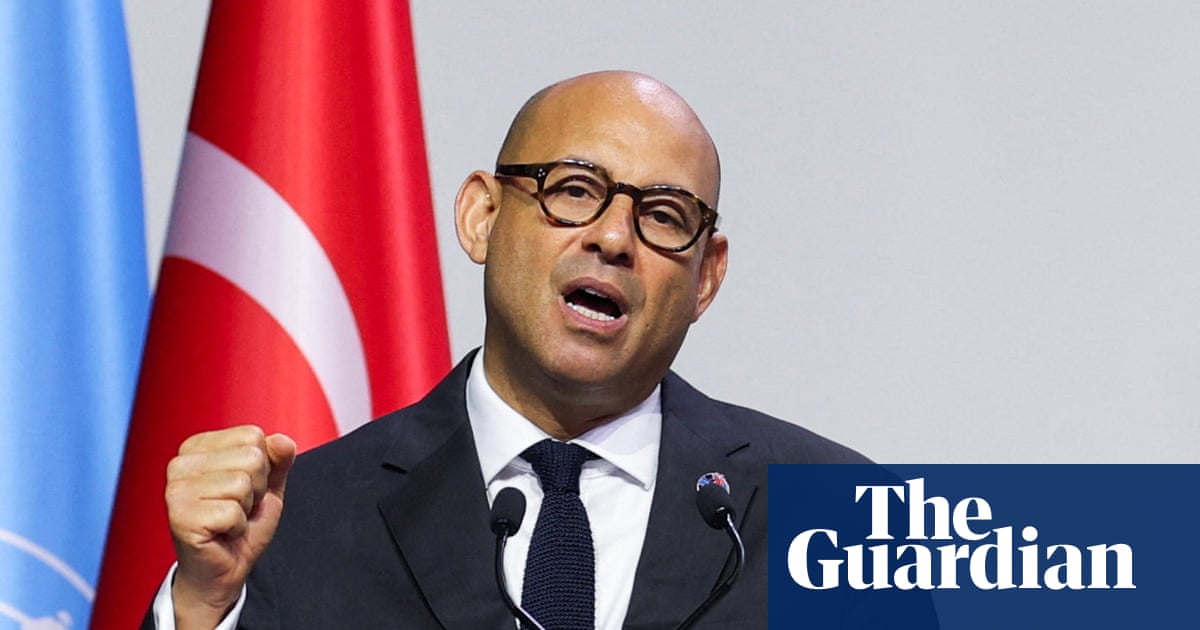
The United Nations' top climate official opened the COP31 summit in Turkey on Monday by tying a worldwide surge in fuel costs to rising prices across the global economy. Simon Stiell told the opening plenary that turmoil in fossil fuel markets has sent a shock through households and is fueling inflation, according to The Guardian.
The two-week conference in Antalya brings together delegations from nearly 200 countries. Turkey, which is hosting alongside Australia, said it expects 100,000 visitors, among them at least 95 heads of state. A leaders' summit is set for Wednesday and Thursday.
Why it matters
The talks are taking place under heavy pressure to produce results. The Guardian reports that frustration has been building over how slowly past commitments have turned into action. The backdrop is a historic El Niño forming in the tropical Pacific and a glacier collapse less than two months ago that triggered severe flooding in Nepal and Tibet, destroying villages and killing at least 1,459 people, with thousands still unaccounted for.
Scientists confirmed this year that global heating will reach at least 1.8C, overshooting the 1.5C goal countries agreed to pursue in Paris in 2015. Johan Rockström, director of the Potsdam Institute for Climate Impact Research, told The Guardian last week that he retains faith in the negotiating process but argued that accelerating warming, an inevitable breach of the 1.5C limit within three to five years and approaching tipping points amount to a global failure if allowed to happen under the Paris framework.
In a statement, UN secretary general António Guterres called on leaders to cut emissions faster, speed up a fair move away from fossil fuels and provide the finance and protection that vulnerable countries need.
Fuel market disruption behind the price spike
Stiell attributed the cost pressure to what he described as chaos in fossil fuel markets. According to The Guardian, US President Donald Trump's war with Iraq and the disruption of the Strait of Hormuz, a key supply route for oil, pushed petrol prices up by 50% worldwide, lifting inflation and slowing economic growth.
Stiell told delegates that this cost turmoil had struck households hard and was spreading inflation across economies. He said the urgency of the moment must push countries forward, noting that global heating is already imposing costs on the planet and that vulnerable communities are bearing the burden, with frustration over the lack of fairness plainly visible.
Australia's climate change minister, Chris Bowen, who is presiding over the negotiations, used his speech to set the tone for the talks. He acknowledged that the 1.5C target will be exceeded but said the world can return to it through cooperation, urgency, solidarity and resolve. Closing his remarks with clenched fists, he urged delegates to show future generations that this generation can meet the challenge.
Electrification goal gains momentum
Hosts Turkey and Australia are promoting renewable energy and a new electrification target as a hopeful alternative for a world still reliant on oil, coal and gas. Bowen said he had consulted countries represented at the talks and found substantial support for electrification. The aim is to lift electricity's share of final energy consumption from about one-fifth today to one-third within the next decade.
Fatih Birol, executive director of the International Energy Agency, told The Guardian that many governments have shown strong interest in joining what he called a historic decision in Antalya. He said the world is entering the age of electricity and that the target would add momentum to that shift. Countries agreed at the 2023 summit to triple renewable energy capacity by 2030, and Birol said endorsing a 2035 electrification goal would send an unmistakable signal to markets while opening the door to more renewable and nuclear power.
The high-ambition coalition, a group of 20 countries pressing for strong outcomes in Antalya, stressed that the 1.5C limit cannot be given up. Jess Gasper, an environmental official for the Marshall Islands, said the threshold is in serious danger but that any overshoot must not become a justification for delay, since every fraction of a degree counts. He said international finance for a single sea wall to protect the Pacific nation took eight years to secure, illustrating why adaptation money is needed, and rejected the idea that his people should face displacement because the world failed to act.
The opening plenary featured a short film with images of fire, flood and storm, telling delegates it was time to reconnect with the planet. The talks began without a dispute over the agenda, which many attendees read as a positive sign, and delegates expressed confidence that a final decision would reference the voluntary electrification goal.
Watch for the leaders' summit on Wednesday and Thursday, and for whether the electrification target survives into the final COP31 decision.